2023 GLOBAL FOOD POLICY REPORT
RETHINKING FOOD CRISIS RESPONSES
With new evidence on what works, now is the time to rethink how we address food crises.
Lessons learned from the Livestock Master Plan and future investment priorities for animal resources development

Under PSTA4, the Rwandan government has set several growth targets for the sector, including increasing milk production from 785 million liters in 2018 to 1.5 billion liters by 2024, and increasing the national herd size from 1.5 million to 2.5 million by 2024. To achieve these targets, the government developed the 15-year livestock sector strategy that identified promising interventions and policies, and a five-year Livestock Master Plan (LMP, FY 2017/2018 to 2021/2022) that set out an investment roadmap to modernize the sector in line with the National Transformation Strategy and PSTA4
PUBLIC INVESTMENT PRIORITIES FOR RWANDA’S INCLUSIVE AGRICULTURAL TRANSFORMATION: EVIDENCE FROM RURAL INVESTMENT AND POLICY ANALYSIS MODELING

Public investment priorities for Rwanda’s inclusive agricultural transformation: Evidence from rural investment and policy analysis modeling Date: February 28,2022 Venue: Ubumwe Hotel, Kigali Time: 12:00pm to 1:30pm The challenging question is how to prioritize public expenditures across a broad portfolio of policies and programs. This prioritization process must address multiple development outcomes and be firmly […]
Conference 2022: Advancing the transformation of Africa’s seed sector: Emerging insights and perspectives
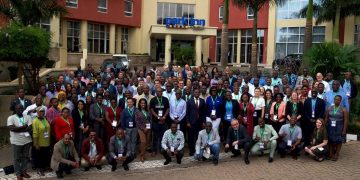
From 17-19 October, over 170 seed sector professionals from African and global organizations gathered in Kigali, Rwanda for the ISSD Africa Synthesis Conference.
The conference enabled attendees to harvest, share discuss and debate innovations in policy and practice that contribute to seed sector transformation in Africa
Agricultural value chain prioritization: Findings from an economywide modeling exercise for Rwanda
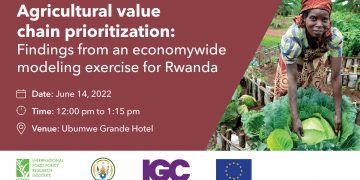
This seminar examined results from a forward-looking application of Rwanda’s most up-to-date economywide model to identify the impact of value chain development across four dimensions: generating economic and sectoral growth; reducing national and rural poverty; generating jobs and employment (both on-farm and in the broader agri-food system); and improving diet quality.