
Under PSTA4, the Rwandan government has set several growth targets for the sector, including increasing milk production from 785 million liters in 2018 to 1.5 billion liters by 2024, and increasing the national herd size from 1.5 million to 2.5 million by 2024. To achieve these targets, the government developed the 15-year livestock sector strategy that identified promising interventions and policies, and a five-year Livestock Master Plan (LMP, FY 2017/2018 to 2021/2022) that set out an investment roadmap to modernize the sector in line with the National Transformation Strategy and PSTA4
The value of control versus the value of time: A field experiment in Rwanda
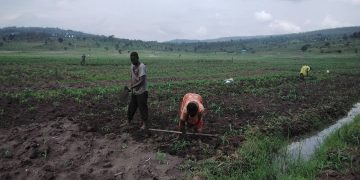
Agricultural development programs often aim to empower women by enhancing their control over income via new work opportunities, but as an unintended negative consequence, these programs can sometimes increase women's already heavy workloads. This raises the question of whether women themselves consider the increased control over income to be worth the additional work. To answer this, we need to know how much they value control over income and how much they value efforts to free up their time.
The Global Food and Energy Price Crisis and Implications for Rwanda
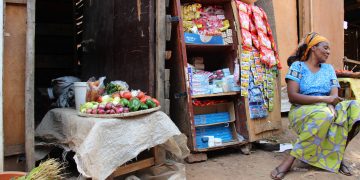
How and why is the global food and energy price crisis impacting Rwanda? How does this most recent crisis exacerbate the economic impact of the COVID-19 pandemic? What can Rwanda do to mitigate the impacts of these shocks and prepare for future shocks?
Economic Policy Modeling for Public Investment Prioritization – An IFPRI Rwanda learning event
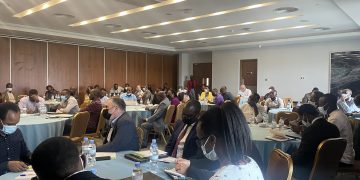
Rwanda posted an annual growth rate of 10.9 percent in 2021—a strong recovery from the downturn caused by COVID-19 in 2020. But today, as new crises upset the global economy, Rwanda must again muster the strength to navigate uncertain times and maintain its course. That means staying on track to achieve the long-term social and economic transformation outlined in the National Strategy for Transformation. IFPRI Rwanda, in collaboration with MINAGRI, hosted a 5 day learning event from February 28 through March 4,2022 using the CGE model to analyze alternative public investment priorities in the agriculture sector, rural economy, and food systems.
How can the agriculture sector be a driver in Rwanda’s transformation process? Key findings from recent IFPRI research
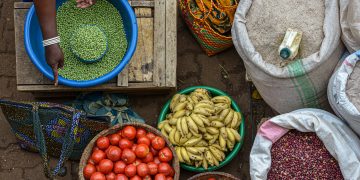
Rwanda is embarking on an ambitious transformation process to move itself from a low-income country to a middle-income country by 2035, with agriculture playing a central role. IFPRI's new research looks at PSTA 4’s contribution to date—not only to economic growth, but also to employment creation, poverty reduction, and other economic improvements—and how to improve returns during the second half of its implementation.